Showing posts with label Fibular Hemimelia. Show all posts

September 13, 2018

Camp No-Limbitations

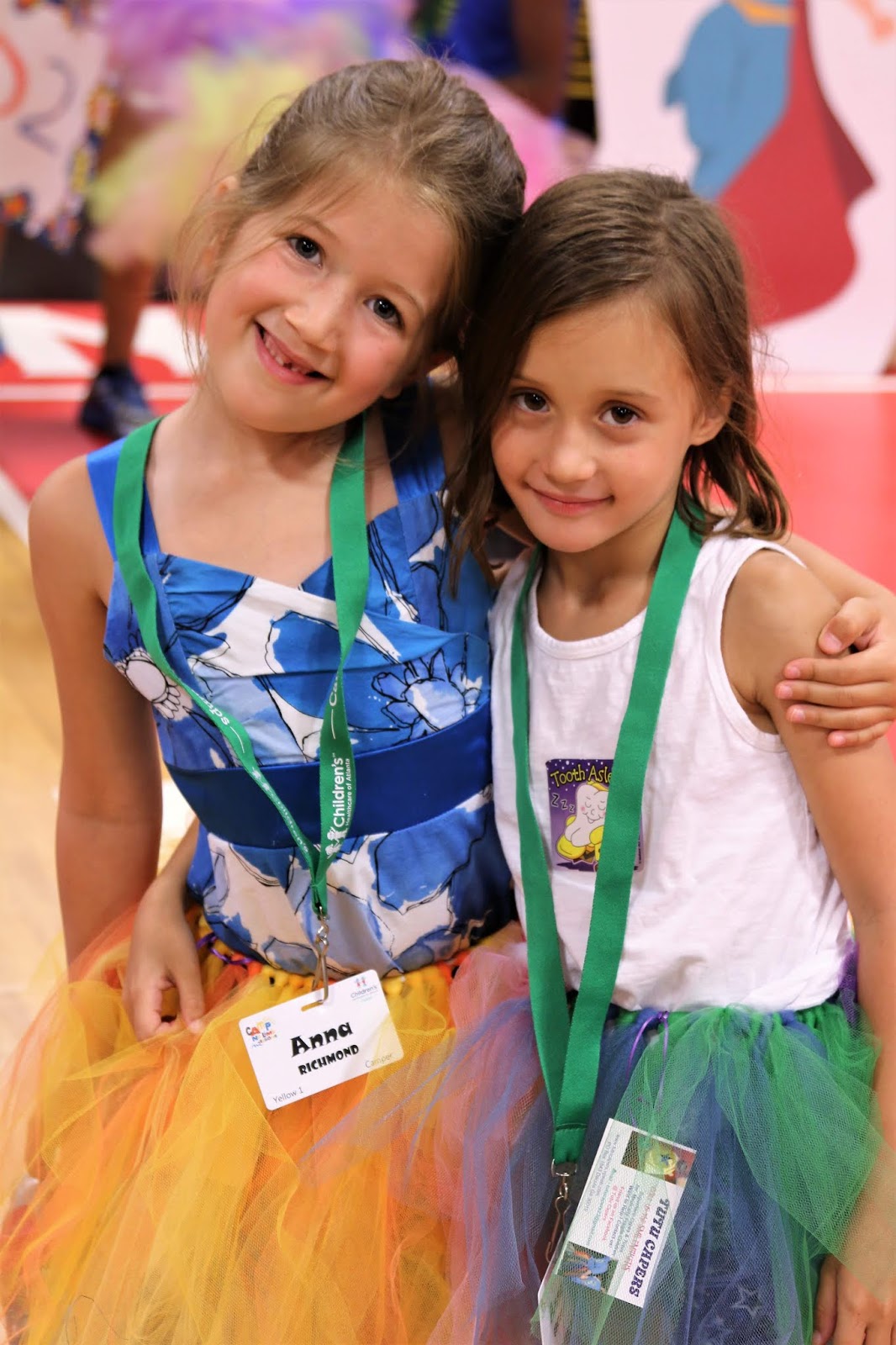
Anna went to a one week sleep-away camp at just 7 years old.  We felt so comfortable sending her because we knew she was in such good hands with Children's Healthcare of Atlanta, who ran the camp for amputees. They had medical staff on site all over and went over the allergy free menu with me extensively. She also had the privilege of attending with a friend from out of town, also named Anna, who has become a lifelong buddy.

I'm so thankful for this program and hope it continues to build Anna's self-efficacy and self-confidence as she grows. She is already asking me when she can go again! Thank you CHA and Camp No-Limbitations!


April 25, 2017

Swimming past challenges


Swimming isn't easy when you only have one foot. Anna has been taking swimming lessons from a swim academy since October. Our recent trip to Florida gave me the opportunity to see her beginning to swim for the first time without help from an adult. I'm so proud of her.


December 27, 2016

Leg #5

Anna's previous leg lasted almost 2 years and she received a new one this past month. Her new leg has a more flexible foot with a metal insert. I don't know any of the fancy terms, but she seems to like it :) Instead of being overwhelmed with fabric choices for her leg, I went to the fabric store and brought back 5 patterns I thought she might like. She chose this one because it was pink and "sparkly".  Here are some pictures and a video of her trying out her new leg.


May 9, 2016

Moving and Shaking


Look at her go! I'm so proud of her! I've been doing a lot of soul searching lately, and realizing (and admitting) that I too often project my emotions on to my daughter. Experiences I went through as a child- hurtful words, sad feelings, they are all a part of me, and I re-experience them when I see Anna in a situation that triggers those emotions. But Anna is not me. She reacts to things differently than I did, she will remember different things than I did, and she will likely bounce back from things more easily than I did (that is, if we are parenting as we hope to). Any parent knows that seeing your child be rejected, disappointed, or fail is heart-wrenching. For me, I've let it upset me TOO much. Worried about it TOO much. Because I bring my own baggage. I'm working to admit that many times, I'm the one who is most upset about something, not her. I worry more about what others will think, not her. I worry that her feelings are hurt and she will be scarred forever, whereas she is over it and moving on to the next thing. For a parent with a child with a disability, these tendencies seem to be further magnified. It's important to realize that our children are not us. Let's allow them a fresh start, a clean slate. Let's acknowledge our own feelings when they come up, put them in their place, and then be the encourager and supporter that our children need us to be.

February 29, 2016

Running

So far, Anna has been able to do most everything other kids her age can do. But as she's getting older, I've noticed that children are starting to surpass her in certain ways. The other day, at a friend's house, the kids were all playing tag. The ground was sloped, which made it especially hard for Anna to run on because her foot doesn't bend which makes her unsteady climbing up a slope. I saw her chasing and chasing but she just couldn't keep up with her faster counterparts. I saw her get tired more quickly. Even though she had a smile on her face, my heart broke. I wanted to help her, to make her go faster like the other kids. I wanted to encourage her. I just wanted to 'fix' it. I decided not to say anything after, except that it looked like she had fun playing tag.


She said, "I was the only one who didn't get to run away from anyone! I had to catch everyone."


I paused and thought about what I should say, or not say. I told her that sometimes things like running fast are a little bit harder for her than the other kids because of her leg, but that she did a great job. I wasn't sure if I should have just listened to her and not brought up her leg... I struggle with knowing whether I'm focusing on it too much or whether it's a good thing to acknowledge her difference and help her frame it in a positive way. These are the questions I ask myself and will continue to ask myself as she grows and has more questions and situations arise.


She is starting to notice some of her limitations and that certain things are going to be a little bit different for her. When I think back to my own childhood, so many vivid memories arise of times when I struggled, and my sensitive nature made these times especially difficult. Ben says it's important not to project your past experiences on to your children, and he's right. But it's hard. I wish she could run like everyone else. Most of the time I feel proud and thankful for Anna's differences, but there are those moments when I wish she didn't have to struggle. This is a seemingly small incident, but it reflects the future in that I know there will be many more bigger hurdles to come. And she can overcome them. I just have to learn the best way to support and encourage her. It will take courage, support, and guidance. I pray that God will equip me with the wisdom and strength to guide my daughter- to know when to be there for her; when to talk and when to listen.

September 12, 2015

A letter from a reader

I receive a very meaningful email from a woman and I wanted to share. I know that making a decision for your child is so difficult and any information I hope I can provide as much information as possible to help parents be informed. I don't usually look at my blog's 'stats' but checked it out today and saw that 356 people viewed the Fibular Hemimelia information page in just one day! I am thankful for this responsibility I have to share information with you, and I take it very seriously. I have received a couple of other emails similar to this one, but this brave woman's really stood out to me. Thank you to her for allowing me to share her experience.


Hello!  I just wanted to tell you that I was born with this condition as was your Daughter.  I knew my leg was shorter and had some issues but had never heard of this condition when I started seeing a new specialist for problems with my ankle.  My parents were given the option to amputate my leg when I was a small child or do the elongation surgery. They chose the elongation surgery. I can understand why my parents made that decision – no one wants their child to have a leg amputated.   And I know that had to be a very hard decision for you and your husband to come to.  I wish my parents would have had the courage do make the decision you made for your daughter.  Even after the surgeries my right leg is 2” shorter than my left leg, I am missing a toe on my right foot, my ankle and foot are deformed.   And it’s a never ending saga – and there are numerous things that are hard for me to do  - walk very far, walk over uneven ground, ect.

September 3, 2015

School Lesson


This week, like last year, I went into Anna's Pre-K class to do a lesson on differences, and to educate the kids on Anna's prosthetic leg. It went so well, and I was so proud of Anna for getting up and telling the kids about her leg. She was so brave and acted like such a big girl.  Over the years I've coached/modeled for her different things she can say when people ask her questions, and now she is completely comfortable answering questions and talking about it. I'm so proud of her.

If you want to read more about the lesson I did, check out this post from last year.


May 5, 2015

Leg #4


Today we received Anna's fourth leg. She's had her current one for 14 months, which is a really long time for a growing child. Her new leg is a little bit more advanced than her previous one. It has a foot with mechanics that allows it to bend a little bit side to side and front and back, which means it will give her more shock absorption when she puts pressure on it (jumping, running, etc.) and will be easier to manipulate. We wanted to go ahead and move forward with the next type of leg even though the foot only came in a size that was a few sizes too big for her other foot. This means that the leg is a little bit bigger than her other one, but still just as functional. We know she will grow into a 'matching' size soon.


Test socket

Test socket


January 23, 2015

Daily Inspiration


First, some inspiration close to my heart:


Next, have you seen the new Toyota Superbowl commercial?


I love this girl. Here are some of my favorite of her performances on Dancing with the Stars:


January 16, 2015

Fibular Hemimelia Q&A


I thought I would share some responses to the most commonly asked questions I get via email, from parents who are pregnant or have a newborn child with Fibular Hemimelia. I hope this will be helpful for others. I am always available to answer additional questions via my email, as well.


1. How does your child swim? Does she wear a special prosthesis?

For us, it depends. We let her decide whether or not to wear her prosthesis in the water. Most often she chooses to play without it, and she doesn't wear it for her swimming lessons because it's easier for her to learn without it. Once she learns to swim, I will also have her practice with it on, just to make sure she could handle survival swimming if she were to ever fall into deep water (because if she ever was in danger, she may very well have her prosthesis on). If she wants to do a lot of walking or moving (especially at the beach), sometimes she chooses to wear her leg. We are okay with it getting wet, since she outgrows them fairly quickly at this age and we don't have to worry about it degrading over time. We  make sure to dry it thoroughly so it doesn't rust. Right now, we actually have two legs so we an alternate if one is wet. Sometimes we use an old leg in the ocean if we have one handy. It won't fit perfectly, but it will usually work well enough. Another thing: the prosthetic tends to fill up with water and get heavy.


2. How does/will she take a shower? Go to the bathroom at night?

Obviously, we are not into showers yet. But I think Anna will have no problem. Her residual limb is long enough to where she can bend down on it and balance. We might end up putting a handle on the shower for balance, or a chair that she can sit in if she needs one to shampoo her hair. I personally think a chair would make more sense. I'm pretty sure she will find a way to manage- she has with everything else. These kids are amazing!  As for the bathroom, Anna is potty trained and has no trouble getting out of bed, going to the bathroom, and using a normal sized toilet by herself (and she only weighs 26 pounds). Remember that they will learn to be mobile easier than you think.


3. What are the financial implications for the future?

I won't sugar coat it. Prosthetics are expensive. The early, most simple ones start at around 5K and they get more pricey as they get older, anywhere from 15K to 100K. It's definitely a financial commitment, and that's hard, especially if you have a high deductible as we do. We are in an ongoing conversation with our prosthetic clinic. Shriners Hospitals used to cover care at no charge, but that has recently changed. Just prepare to spend a lot of money on medical expenses. Maybe it means you have to cut back your lifestyle, but I can't think of a better reason to do so.


4. Were you worried when you had a second child that there would be something wrong with him or her?

I was not worried about having a second child with a birth defect. FH has not been shown to be genetic, and I trusted in the science that came to that conclusion. That said, I was very careful to avoid medication, contracting illnesses, or exposure to teratrogenic chemicals during the first trimester (as most anxious mothers do :)


5. How did you know what treatment decision to make? Can you give me any advice on navigating the options?

I would highly recommend getting at least 2-3 opinions. Most people head to their nearest children's hospital, which is fine (that's what we did). Problem is, most surgeons only see a few cases like this a year, if any, which means they have much less experience with outcomes. Places like Shriners Hospitals for Children specialize in orthopedics. Their surgeons see patients with FH daily, whereas surgeons in other hospitals might only treat one or two per year. That said, each surgeon is obviously different. I think it's definitely worth checking multiple places. Make a list of questions and see how knowledgeable the surgeon is. Ask what your child's projected leg length discrepancy would be. Ask how many amputation/osteotomies they do each year for children with a missing fibula. Ask what kind of amputation they prefer (Boyd, Symes) and why. Ask what their proposed timeline for treatment would be.   We were only comfortable doing the surgery around age 11 months, which is when Shriners' surgeons choose to do it.


6. Will I always feel this sad and anxious? I am so afraid of what this means for my baby.

No, you will not always feel this sad. If you've ever felt like this or like this, it may be hard to believe. The first two years are  hard- really hard. But all that sadness, grief, and anxiety really, truly goes away once you see your child thriving. I honestly have trouble remembering how upsetting it was three years ago, because things are so different now. There are lots of challenges and my heart still aches on some days (though honestly, much more regarding her food allergies and asthma than her prosthesis). Certain situations can be hard. The first time Anna tried to walk in plastic princess high heels like her friends, when she discovers a limitation, when she meets someone new and gets asked lots of questions. But they learn to handle it, and so do you.


7. What can I do as a parent to help my child develop a healthy view of himself/herself before they start facing some of the obvious challenges of having a disability?

As a parent (and a therapist), I believe it's important to be open with children. Talk to them about it. Don't pretend like they aren't different; they are. And they will come to realize it. But help them see that it doesn't have to be a bad thing. Help them build their identity by introducing them to books, toys, media, stories, and people with amputations (here is my list of resources). Model for them ways to respond when people ask questions (stay positive). Teach them that people will be curious about things they don't know and that they can expect questions and looks. At the same time, it's okay to educate them. I was always advised not to set limitations on my child and that was the best advice I've received, because there were times I've been tempted to tell Anna she 'can't' or 'shouldn't' do something (like walking around in those heels!), and she figured out her own way. I let her fall down, I risked that she might get hurt. I held my tongue. And she surprised me. She didn't know any different. Educate her teachers on some of these things. Here  is a link to the lesson I did for Anna's preschool class.


8. Any practical tips for prosthetic wearing? How do you handle any issues that arise? I feel clueless as to how to make sure my child is getting the best appliance with the best fit. How do I recognize if there is a problem?

I cannot express enough the importance of finding a clinician who is skilled working with children and whom you feel comfortable with. Fit is the most important thing and it's hard to get just right as they grow. Anytime you notice that your child is walking even a little bit differently, take them in to their prosthetist to have them evaluated. Kids can develop poor habits quickly, and they are the experts at telling when an adjustment is necessary. I would also recommend going in every 3-4 months at least if you don't notice any changes, just to be sure. Kids grow super fast. If your child's skin starts to get irritated, STOP wearing the prosthesis as much as possible. It will only get worse, and if it goes too far (like developing a blister), you may have to be off the leg for a couple of weeks, which is clearly a complicated thing. Any abnormalities on the skin usually need to be addressed right away.


9. Any tips for dealing with questions/stares/comments and potential hurtful things down the road?

I'm not an expert at this, and I'm still learning. But staying positive seems to really help. Assume the best about people's intentions. Looking is inevitable and human nature. Helping the kiddos be comfortable with it is easier than trying to get people to not stare or hoping your child won't notice.

I tell Anna that any teasing or unkind words says more about the other person than it does about her: some people are mean because they are hurting inside. Some are mean because someone is mean to them, too. Some people are just curious because they have never seen something like that before. Some people are mean because they don't know any better. But whatever the reason, it doesn't say anything about YOU. I try to teach her that every kid struggles or is different in some way, sometimes it's just more obvious than others.

Once I heard Anna tell another little girl that when she got older she was going to have two real legs. It broke my heart. As kids get older, they will go through their own process of realizing what's different about them and how to incorporate that into their identity It's important to be there for them, acknowledge their feelings, and not try to make it all better or give cliche, pat responses. Just be there and show your support and love, and that you believe in them. That's all I know to do.

Oh, and remember that kids pick up on and recall what you say about them to other adults. So watch your words, even when you think they aren't paying attention. Don't talk about them as if they weren't there, and respect them the way you would another adult. Remember that you are shaping their view of themselves by your words- not just to them, but to others, as well. I'm always messing up on that one.

I hope that was helpful!


September 5, 2014

Lessons Learned


Anna's first day of Pre K-3 was last week! Prior I had a discussion with her teacher about keeping her safe in terms of her allergies. I also briefly explained her leg and suggested I come in and do a quick lesson with the kids so that she didn't have to deal with nonstop questions.

The day I came in the teacher thanked me because she said lots of kids were already asking questions and a couple even tried to touch and pull at it (grrrr).


This is one instance where my school counseling experience paid off- I am used to giving classroom guidance lessons!  Here is how the lesson went for those of you who want to talk to your child's class, which I definitely recommend!


The key with young kids is to keep their attention by being short, concise, and keeping them involved (no lecturing). First, I played a little game. I had all the boys stand up, then all the girls stand up, then those with a sister, a brother, blond hair, brown hair (this was about all you can do with three year olds' attention span). If you are teaching older kids go into more depth like interests, height, etc. 
I talked about how everyone is different; some in ways we can see, and some in ways we can't see.

Then I read "It's OK to Be Different", a really cute, funny book.


After the book, I talked about how one way kids are different is that they have different arms and legs. I showed them some pictures from the book "Imagine: Amazing Me!" and asked what was different about the arms or legs of the kids in the book ("she's missing her arm!"). I pointed out how the kids were all doing what every other kid can do (ballet, soccer, climbing, etc.).


Then I brought up Anna and explained how she had a different leg; how when she was born she was missing part of her leg and so the doctors had to do a special surgery on her, and now she has a leg that allows her to do everything other kids can do. I asked them their favorite animals and their favorite characters and I told the kids how Anna can get anything she wants put on her leg! ("cool!").


Next, I brought out her past three legs and asked two 'helpers' (to involve the kids and keep their attention) up to help me hold them up. I explained how each time she grows she needs a new leg, and I asked the kids which was the smallest, largest, etc. Then we passed them around for each kid to see ("Let me see! I haven't seen it yet!")


After that we talked about how Anna's leg is a part of her body, and just like we don't touch other people's body parts, we don't touch Anna's without her permission ("hands to yourself"). I said that anytime they have a question they can ask Anna and she will answer; they don't have to ask anyone else but Anna.


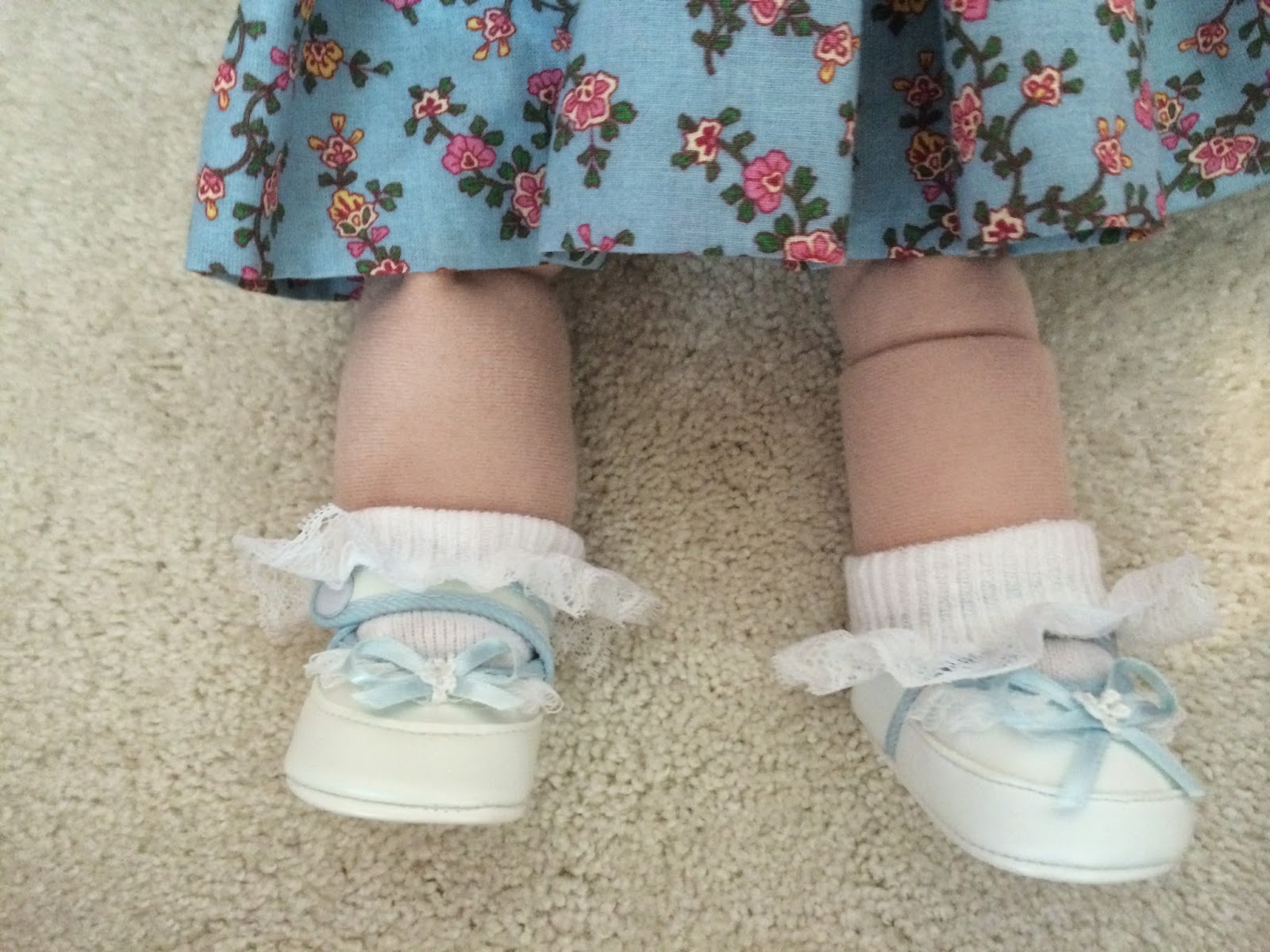
Lastly, I brought out Anna's doll Sarah and showed them how her leg came off. We passed her around, and they thought that was pretty cool.


Finally, I had copied some coloring pages of kids with prostheses (both boys and girls) and I left them with the teachers so the kids could color them and talk more about being different. The teacher later had the kids make their own self-portrait.


Here are some of the resources I used for the lesson:


July 27, 2014

Special delivery


We have been eyeing these special needs dolls from Karens Kottage for quite some time now and finally went ahead and put our order in. I was so excited for Anna to have a doll that looks like her to play with. I think things like this that children can relate to are important for their identity development. We are so happy with 'Sarah'!


May 20, 2014

As life passes us by...


It's hard to believe that Anna is three years old. In some ways life has flown by the last three years while in others it has seemed to trudge on. Such is the ebb and flow of life. I've always loved the book of Ecclesiastes and its emphasis on seasons. With every season for mourning, there is a season for rejoicing.

To every thing there is a season, and a time to every purpose under the heaven.
Ecclesiastes 3:1
 
God doesn't promise us there will be no sorrowful seasons, but that there is always Hope on the horizon, and often this hope is magnified and our reward of glory that much greater because of the sorrow we passed through on our way there.
 
I want to know Christ—yes, to know the power of his resurrection and participation in his sufferings, becoming like him in his death, and so, somehow, attaining to the resurrection from the dead.
Philippians 3:10
 
 
Two years ago this was our baby girl:


And here she is today as beautiful, vibrant, and alive as can be:


I'm so thankful for the life God has brought into our lives and for every step of the road in mothering her.
 
Here are some of our latest life pictures:


My first 10K: The Charleston Cooper River Bridge Run


My sister and her new family's visit from Boston.

Cousins and a very happy Kimmie.

Anna's 3rd birthday


So thankful for these two 'peas in a fibular hemimelia pod'.


New 'do. Short hair has revolutionized my life. Why did it take me this long to realize this?

Missing Grandma and Pi's bi-monthly visit full of love and attention.